

AI in the Physical World: Our Investment Thesis | Hickory Falls Ventures
Andrew Chen, Managing Partner, Hickory Falls VenturesApril 2026
There's a moment in every investor's journey where the pattern becomes undeniable.
You look back at the bets you've made — some deliberate, some instinctive, some that felt like outliers at the time — and you realize they were all pointing in the same direction. Not because you planned it that way from the start, but because a coherent worldview was quietly doing the work beneath the surface.
For Hanna and me, that moment has arrived. And it's prompted us to do something we've been building toward for a while: put into words, clearly and publicly, what Hickory Falls Ventures actually believes.
Where This Started
I didn't come to investing through a fund. I came through operating.
I spent years as a CPO and founding executive in commerce — building products at CommentSold, which processed over $5 billion in GMV, and at Flow Commerce, which was acquired by Global-e for $500 million. In those roles, I was never far from the reality that software only matters when it changes what happens in the physical world. Merchants picking, packing, and shipping. Supply chains stretching from factories in Asia to front porches in the midwest. The moment you forget that the digital layer serves a physical one, you start building tools that look good in demos and fail in practice.
That instinct has followed me into investing. And it's shaped nearly every meaningful bet HFV has made.
Running AAA World-Wide, our multi-generational marine equipment manufacturing business in Taiwan and Asia, has sharpened this even further. I'm not evaluating physical-world AI from the outside. I'm living it — inside legacy equipment, fragmented data systems, the organizational complexity of real manufacturing operations. I know exactly what it feels like when AI promises don't survive contact with the factory floor.
That's the ground truth most investors in this space don't have.
The Thesis, Stated Plainly
Here's what we believe:
Intelligence is crossing from the digital world into the physical one — and the deployment gap is where durable value gets built.
The first wave of AI value creation was digital-native: language models, code generation, software productivity. That wave is real and we've participated in it — Anthropic, OpenAI, Databricks, Perplexity are all in our portfolio. But the next durable wave will not come from purely digital products. It will come from embedding intelligence into high-friction, real-world systems — manufacturing, supply chains, logistics, defense, space, physical performance — where the barriers to adoption remain high and the returns to successful deployment compound over time.
The central insight is this: the bottleneck is not intelligence. It is translation.
Most attention in AI is focused on models — larger, faster, better benchmarks. In the physical world, that's not where the constraint is. The real problem is translating AI capability into action inside messy, real-world systems. That means translating AI outputs into workflows that humans actually use. Translating unstructured, inconsistent data into something models can learn from. Translating between legacy systems, supplier relationships, and decision-makers who've been doing things a certain way for twenty years.
The companies that win in this next phase won't necessarily build the best models. They'll build the best bridges.
The Last Mile Is the Hardest One
In software, deploying a new product can be as simple as pushing an update. In the physical world, deployment means changing how a factory schedules production, altering how a buyer selects suppliers, introducing new decision-making tools into long-standing human relationships.
These are not just technical problems. They are behavioral problems. Organizational problems. Trust problems.
This is why so many "digital transformation" efforts in manufacturing and industrial sectors have underdelivered. They tried to impose software logic onto systems that weren't designed for it. The last mile of AI — getting it to actually work in real environments — is where the hardest challenges emerge. It is also where the most defensible companies get built.
One thing the displacement narrative around AI gets wrong in physical industries: what we see from inside our own manufacturing operations isn't replacement — it's reshaping. Buyers become decision-makers supported by intelligence. Operators become supervisors of more adaptive systems. Engineers become integrators of tools, data, and process. The value shifts from execution to coordination, judgment, and speed of decision-making. That transition is slower than in software. It is also far more defensible.
This is the gap we invest in — and it is the gap that most AI-focused investors, building from digital-native backgrounds, cannot see clearly from where they stand.
Three Pillars
Our thesis rests on three interconnected beliefs:
First, deployment beats invention. The frontier has been established. The opportunity is not in building better foundation models — it's in applying AI to the physical world. The United States leads in AI invention. The alpha is in deployment, and deployment requires exactly the kind of operator-level domain knowledge that HFV has developed from the inside. Further more, deployment is a proxy for product market fit and go-to-market that has spoken to and solved problems for real clients.
Second, the physical world is broadly defined. Manufacturing is the origin of our insight, not the ceiling of our thesis. Any domain where intelligence meets physical constraint — robotics, logistics, defense, space, sports performance, human sensing and biometrics — is in scope. What matters is not the industry. It's the physics: real-world constraints that can't be simulated away, high stakes for marginal performance gains, and historically under-digitized data environments.
Third, physical AI compounds. This is the mechanism that makes the thesis durable. Unlike purely digital AI products, physical AI deployments generate structured, causal, empirically verified data as a byproduct of operation. Every deployment improves the underlying models. Every improved model enables better deployments. That flywheel — data generated by operating in the real world feeding back into AI capability — is how moat actually gets built here.

What the Portfolio Was Already Telling Us
Looking back, the pattern was there long before we named it.
When we backed Limitless — then called Rewind — we were early on a thesis that most people hadn't articulated yet: that AI would eventually have to escape the screen. That the next platform shift wasn't another app, but ambient, wearable intelligence that lives in the physical world with you. Meta's acquisition of Limitless validated that bet. But more importantly, it confirmed the direction of travel.
When we invested in Sportsbox AI alongside my best friend Daniel Jang and celebrated Jeehae Lee's journey from LPGA Tour competitor to AI founder, we were betting on something specific: that AI could decode physical human motion and democratize what elite coaching had kept exclusive. Jeehae built patented 3D motion capture technology that turns a smartphone into a biomechanical analysis tool. Bryson DeChambeau's acquisition of Sportsbox — and the launch of SAMI, their agentic AI coaching platform — is the physical world AI thesis expressed in sports. Intelligence, deployed into a high-stakes physical domain, where the deployment gap was real and the moat was real.
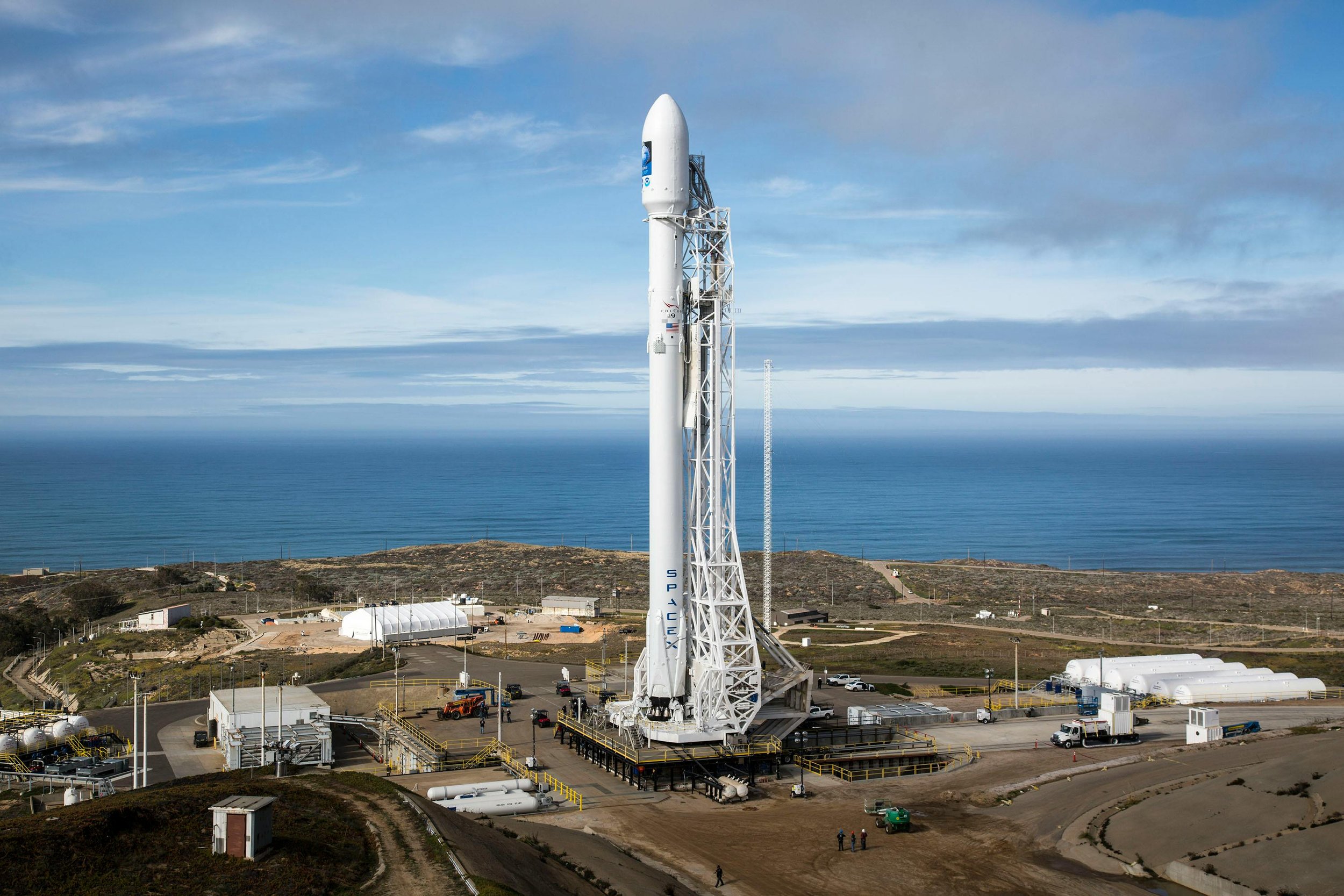
When we built our space portfolio — Spaceium, Starlab, Karman+, Skydio, Epirus, Voyager Technologies — we weren't making disconnected bets on rockets and satellites. We were betting on orbital infrastructure: the physical world beyond Earth's atmosphere, where intelligence has to operate autonomously, in extreme conditions, with no margin for deployment failure. Spaceium's demonstration of 0.003° rotation accuracy on SpaceX's Transporter-15 mission — 70 times more precise than existing space robotic arms — is physical AI at its most demanding. Voyager's IPO on the NYSE was a signal: the infrastructure of the orbital economy is real, it's being built, and the companies building it are valuable.
When we backed Kargo in autonomous freight logistics, Hyperscience in intelligent document extraction for industrial workflows, and Workrise/RigUp in skilled labor for energy and industrial sectors — these weren't incidental bets. They were investments in the intelligence layer of physical supply chains: the unglamorous, high-friction, economically critical systems that move goods and people and energy through the real world.
And when we participated in Levels, Sandbox VR, and the Paris Musketeers and Red Bull Italy SailGP through Muse Capital, we were extending the thesis into human physical performance: the sensing and optimization of how humans move, compete, and experience the physical world.
None of this was accidental. We were just late in naming it.
Our Edge — And Why It's Real
Two things give HFV genuine differentiation in this space.
The first is operator experience. I run businesses inside global manufacturing and supply chains. When a startup tells me their AI "integrates seamlessly with legacy equipment," I know what that actually means. I know which integration challenges are solvable and which are organizational. I know what it takes for a factory operator to say yes, and I know the difference between a pilot and a deployment. That ground truth is rare in the investment community, and it makes our diligence sharper.
The second is Asian market access. A disproportionate share of the physical world economy — manufacturing, assembly, hardware production, supply chain — is based in Asia. We are embedded in that ecosystem as operators, investors, and through our Venture Partner role at SparkLabs Taiwan. We see deals earlier. We understand the deployment environment more accurately. And we have a front-row view of how quickly physical AI actually reaches production scale, because the factories adopting it are our neighbors and, in many cases, our peers.
Why Now
This shift is happening now for specific reasons that didn't exist five years ago.
AI has reached a level of usability where non-technical operators can actually interact with it — not just engineers configuring models, but buyers, plant managers, and logistics coordinators using intelligence as a daily tool. Global supply chains are under sustained pressure, forcing companies to rethink efficiency and resilience in ways they've avoided for decades. Labor constraints are pushing organizations to do more with the same or fewer people. And data is finally becoming accessible, even in traditionally analog industries — sensors, connected equipment, and digitized workflows are creating the raw material that physical AI needs to learn from.
These forces are converging. And they are pushing AI out of the digital world and into the real one — one workflow at a time, one decision layer at a time, one industry segment at a time.
Many attempts will fail — not because the technology doesn't work, but because it doesn't fit the environment. The companies that get it right will become deeply embedded in how the physical world operates. That embeddedness is the moat.
What We're Looking For Next
We're actively evaluating companies at the intersection of AI and physical operations — with particular focus on manufacturing robotics, autonomous logistics, industrial intelligence systems, and physical performance AI. Through SparkLabs Taiwan, we're seeing a remarkable cohort of seed-stage founders building in exactly these categories, many of whom are building for an Asian manufacturing base that most Western investors don't have visibility into.
If you're building at the deployment layer of physical world AI — whether that's robots on a factory floor, intelligence in a supply chain, autonomy in orbit, or AI that understands the human body — we want to talk.
A Note on the Broader Bet
A16z published a piece this week on what they're calling "frontier systems for the physical world" — covering robot learning, autonomous science, and new human-machine interfaces as the leading edges of physical AI. It's an excellent read, and it confirmed something we've been watching closely: the primitives are maturing. Simulation infrastructure, embodied action architectures, learned representations of physical dynamics — these are the enabling layers beneath the applications we're investing in. We track this infrastructure closely and use it as an evaluation lens when we assess application-layer companies. The question we always ask: does this company have credible access to the technical primitives it needs to scale? If the answer is no, no amount of application-layer insight will save it.
The broader bet is this: we are at the beginning of a phase transition. When AI systems gain access to new modalities of interaction with the world — when they can see, hear, move, and operate autonomously in physical environments — the resulting capabilities are qualitatively larger than the sum of constituent improvements. The transition from digital to physical AI is that transition. And it's happening now.
We've been building toward this thesis for years, investment by investment, factory visit by factory visit, diligence call by diligence call. We're naming it now because we think the timing is right — and because we want the founders building in this space to know exactly what we believe and why.
Read the Full Thesis
If you want to go deeper, we've published our full investment thesis on the HFV website. It covers our three pillars, our edge, our portfolio expression across space and defense infrastructure, physical supply chain and logistics, physical performance and human sensing, and the infrastructure layer we use as an evaluation framework.
You can read it at hickoryfallsventures.com/thesis.
We're looking forward to the conversations it starts.
— Andrew Chen, Managing Partner Hickory Falls Ventures New York City + Taipei, Taiwan